
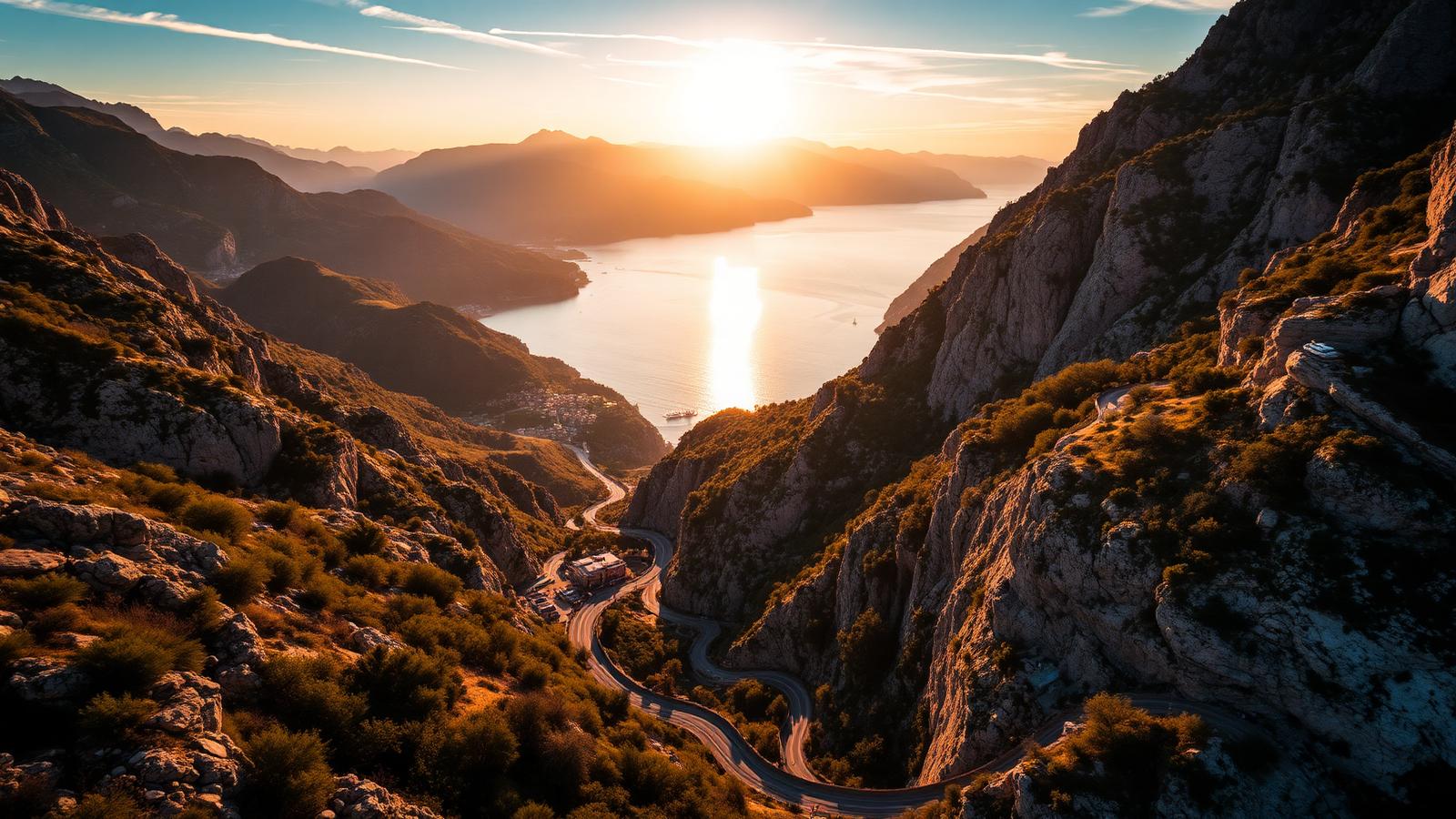
Montenegro is one of the few countries in Europe where having a car transforms your trip completely. The coast is manageable without one. The interior - Durmitor, the Tara Canyon, Ostrog, Lovćen, Lake Skadar - is practically inaccessible any other way. This guide covers everything you need before you pick up keys at Tivat or Podgorica airport: rules that differ from Western Europe, mountain roads that require a different kind of attention, parking realities in the tourist towns, and a few things that catch first-time visitors out.
Quick reference: Montenegro road rules
| Rule | Montenegro | Notes |
|---|---|---|
| Drive on | Right side | Same as most of continental Europe |
| Speed limit (town) | 50 km/h | Strictly enforced. Fines: €30–€2,000 |
| Speed limit (rural) | 80 km/h | Unless signed otherwise |
| Speed limit (motorway) | 100 km/h | Only one motorway section exists (Bar-Boljare) |
| Blood alcohol limit | 0.03% BAC | Stricter than EU 0.05%. Effectively zero tolerance. |
| Lights | On at all times | Mandatory day and night, year-round |
| Seatbelts | Mandatory all seats | Rear passengers included |
| Mobile phone | Hands-free only | Same as EU rules |
| Winter tyres | Nov 15 – Apr 1 | Mandatory on mountain roads in this period |
| IDP | Recommended | For non-EU licence holders (~€20) |
| Petrol price | ~€1.65/litre | Verified June 2026. Scarce in national parks. |
Tolls, ferries and costs
Montenegro has almost no road tolls - but there are two paid crossings every visitor should know about.
| Crossing | Detail |
|---|---|
| Sozina Tunnel (E80, near Sutomore) | 4.1km tunnel. The main shortcut between the coast and Lake Skadar/Podgorica. Paid northbound only. ~€2.50 for a passenger car. Cash or card. Saves 20–30 min vs the mountain road. |
| Kamenari–Lepetane Ferry | Crosses the Verige Strait - the narrowest point of the Bay of Kotor. Saves ~40 min of driving around the bay. Runs continuously. ~€4.50 for car + driver. 10-minute crossing. |
| No other tolls | All other roads in Montenegro are toll-free, including the E65 coastal highway between Herceg Novi and Ulcinj. |
The roads: what to expect by zone
The E65 coastal highway
Connects Herceg Novi → Tivat → Kotor → Budva → Bar → Ulcinj. Montenegro's best-maintained road. Two lanes for most of its length. Stunning sea views. In July and August: expect heavy congestion, especially around Budva and on the Bay of Kotor section. Drive early morning or after 7pm to avoid the worst of it.
The Kotor serpentine (to Lovćen)
25 numbered hairpin bends climbing from sea level to over 1,000 metres. Montenegro's most famous drive and one of the most photographed roads in Europe. Not technically difficult if you drive calmly - buses use it regularly. Honk before blind corners (local practice on all mountain roads). Don't drive it at night if unfamiliar. The view from the top justifies the drive alone.
The Morača Canyon road (E65 north of Podgorica)
The route north from Podgorica to Kolašin follows the Morača River through limestone canyon walls. Spectacular - and demanding. Narrow sections, no barriers in several places, sheer drops. Beautiful in daylight. Genuinely challenging after dark. Requires full attention throughout.
Mountain roads to Durmitor / Žabljak
Main access roads to Žabljak are fine. Beyond the town, tracks become unpaved quickly. Fill up in Žabljak or Nikšić before heading deeper into the national park - petrol stations are scarce. Avoid remote tracks at night or after rain without 4WD.
Unwritten rules locals know
| Rule | Explanation |
|---|---|
| Honk before blind corners | On narrow mountain roads, a short toot before a blind bend is standard practice - not aggression, but safety communication. |
| Headlight flash from ahead = speed camera | An oncoming driver flashing headlights is almost always warning of a police checkpoint or speed trap. Flash back to return the favour. Not illegal, broadly practised. |
| Headlight flash from behind = overtake intent | The same signal from behind means the driver wants to pass. Move right and let them through. |
| Zero tolerance on alcohol | Legal limit 0.03% - effectively zero after any alcohol. Checkpoints common on coastal roads in summer and mountain roads at weekends. |
| Perast = no cars | Perast is pedestrianised year-round. A barrier stops vehicle entry. Park before the barrier. Ignore anyone saying parking requires a boat tour purchase - tourist scam. |
Parking in tourist towns
| Town | Parking situation | Practical tip |
|---|---|---|
| Kotor | Very limited. €0.50–1.20/hr in paid zones. No free street parking inside Old Town radius. | Park at the large lot before the Old Town (signposted). Walk 5–8 min to the gates. What everyone ends up doing. |
| Budva | €0.50–1.00/hr in central zones. Limited near Old Town. | Park near the marina or along the main road and walk to the Old Town. Free parking exists further out. |
| Perast | Vehicle access blocked. Private lots: €8/day or 'free' with forced tour purchase. | Park in Risan (5 min away) or on the free verge BEFORE the barrier. The village is tiny. |
| Herceg Novi | Steep town, limited spaces. Most problematic city for parking. | Ask your accommodation for a recommendation before arrival. |
| Tivat | Porto Montenegro: paid. Town: more manageable. | Porto Montenegro has designated visitor parking. Town centre is much easier than Kotor. |
Car rental: what to check before you sign
- Automatic vs manual: Montenegro has far fewer automatics. Book with a major company and confirm in writing.
- Cross-border restrictions: Most agencies allow Croatia. Travel to Romania, Poland, Greece is often prohibited. Check before booking.
- Insurance excess: CDW reduces but does not eliminate liability. Excess €500–€2,000. Excess reduction at pickup is often the right call on mountain roads.
- Small car vs SUV: For pure coast driving, any small car works. For Durmitor and mountain tracks, a higher-clearance vehicle is more comfortable.
- Tivat Airport is the better pick-up point for coastal trips: 20 min to Kotor, no mountain road immediately.
Frequently asked questions
A base for your Montenegro road trip
Mighty Montenegro manages apartments and villas across the coast - from Budva and Tivat to Kotor and Herceg Novi. All within easy reach of Tivat Airport, the best arrival point for a Montenegro road trip.
Browse rentals →