
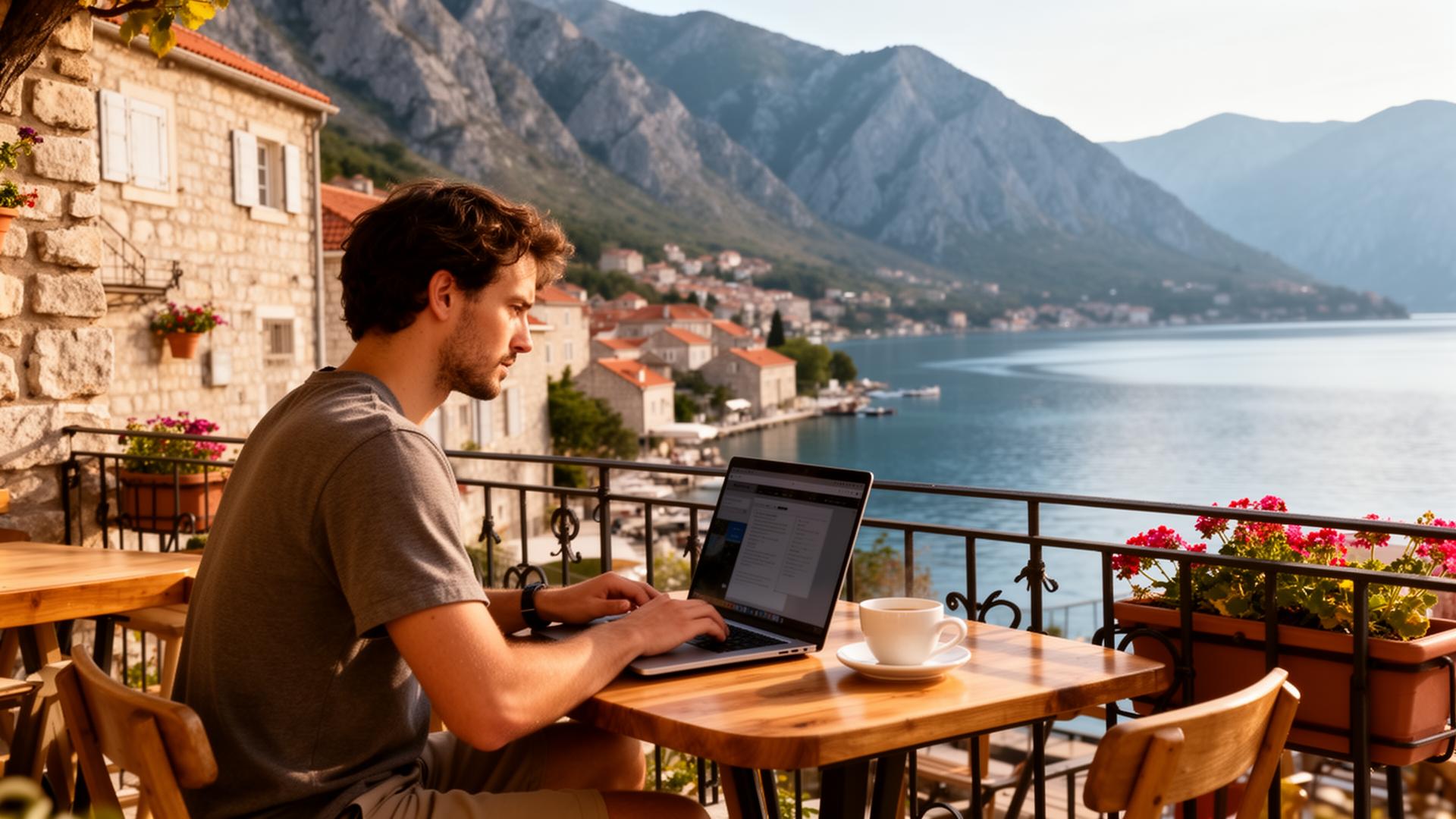
Montenegro ranked third globally as a digital nomad destination in early 2025 (VisaGuide.World Digital Nomad Index) - behind Spain and the UAE. A dedicated nomad visa, 0% tax on foreign income, the euro, reliable fibre internet on the coast, and a cost of living well below Western Europe make it a credible European base for remote workers. This guide covers the practical realities without the promotional filter.
The digital nomad visa
The digital nomad visa is a genuine fiscal advantage for self-employed freelancers and remote employees. Zero tax on foreign income for 4 years is a strong incentive over most European alternatives - Portugal's NHR regime, Estonia's e-Residency, and Georgia's 1% tax are the closest comparators.
Internet quality: what to expect
Internet reliability is the most important variable for nomads. Montenegro's performance is location-dependent.
| Location | Connection | Typical speed | Notes |
|---|---|---|---|
| Coastal cities (Budva, Tivat, Kotor) | Fibre + cable | 80–300 Mbps | Good. Power cuts occasional. |
| Podgorica | Fibre widely available | 100–300 Mbps | Best in country. Most consistent. |
| Herceg Novi | Cable/fibre mixed | 40–100 Mbps | Good overall. |
| Northern mountains (Žabljak, Kolašin) | DSL or 4G mobile | 5–30 Mbps | Variable. Verify before booking. |
| 4G mobile (coast + cities) | LTE | 30–50 Mbps | Reliable backup. SIM €15/month. |
| 5G (Podgorica + coastal 2026) | 5G rollout | 100–300 Mbps | Rolling out 2026. |
Coworking spaces
| Space | Town | Best for |
|---|---|---|
| AdriaHub | Budva | Coast-based nomads, community events, sea-view work |
| Impact Hub Tivat | Tivat | Porto Montenegro area, modern infrastructure, international crowd |
| NEST Coworking | Podgorica | Year-round reliability, best value, permanent resident community |
| Kolektiv Novi | Herceg Novi | Quieter atmosphere, Bay of Kotor views, lower cost |
All four spaces offer day passes and monthly memberships. Many cafés on the coast also function de facto as coworking spaces - consistent Wi-Fi, €1.20 espresso, and reliable seating. Dukley Beach Club in Budva is specifically noted for excellent Wi-Fi coverage.
Monthly cost of living: honest breakdown
Costs vary significantly by city, season (coastal June–September = higher), and lifestyle. Three reference budgets below.
| Item | Lean (Podgorica) | Mid (Coast off-season) | Comfortable (Coast peak) |
|---|---|---|---|
| Accommodation (1BR) | €400–€600 | €500–€800 | €800–€1,200 |
| Food (home + eating out) | €200–€300 | €300–€450 | €500–€700 |
| Transport | €30–€60 | €50–€100 (scooter) | €100–€200 |
| Coworking / café work | €80–€150 | €100–€200 | €150–€250 |
| Phone / internet | €15–€25 | €20–€35 | €25–€40 |
| Health insurance | €60–€120 | €60–€120 | €100–€200 |
| Miscellaneous | €100–€200 | €150–€300 | €300–€500 |
| Monthly total | €900–€1,450 | €1,200–€2,000 | €2,000–€3,100 |
Montenegro is 40–60% cheaper than comparable Western European coastal destinations (Côte d'Azur, Algarve, Amalfi). It is more expensive than Southeast Asian nomad bases (Bali, Chiang Mai). For a nomad earning a Western salary, the coast in shoulder season delivers the best quality-to-cost ratio.
Where to base yourself: city comparison
Podgorica
Year-round productivityBudva
Shoulder seasonsKotor
Atmosphere + productivityTivat
Modern infrastructureHerceg Novi
Slow livingPractical realities
| Topic | Detail |
|---|---|
| Currency | Euro. No exchange fees, no conversion headaches. European bank cards work everywhere including ATMs. |
| Language | Montenegrin (South Slavic). English widely spoken in tourist and business contexts on the coast. Less so in northern/rural areas. |
| Healthcare | Private healthcare is accessible and inexpensive - a GP visit costs ~€25. Health insurance required for nomad visa. Quality varies; Podgorica has the best private clinics. |
| Delivery / apps | No Uber, no McDonald's, no Starbucks. Glovo operates in Podgorica and coastal towns. Taxis via WhatsApp or local apps. First Zara opened end-2025 in Podgorica. |
| Banking | Account opening is straightforward with a passport. SEPA transfers to/from EU since October 2025. Wise and Revolut work without issues. |
| Safety | Montenegro ranks 34th globally on the 2025 Global Peace Index - above Sweden and Poland. Level 1 US State Department travel advisory. Crime affecting tourists is extremely low. |
Frequently asked questions
Monthly rentals for nomads
Mighty Montenegro manages short-term and mid-term rental apartments across the Montenegrin coast - including monthly rentals suitable for digital nomads during shoulder and off-seasons in Budva, Kotor, Tivat, and Herceg Novi.
Browse rentals →